Showing posts with label World Building. Show all posts

The Garden Bench Joan Vincent

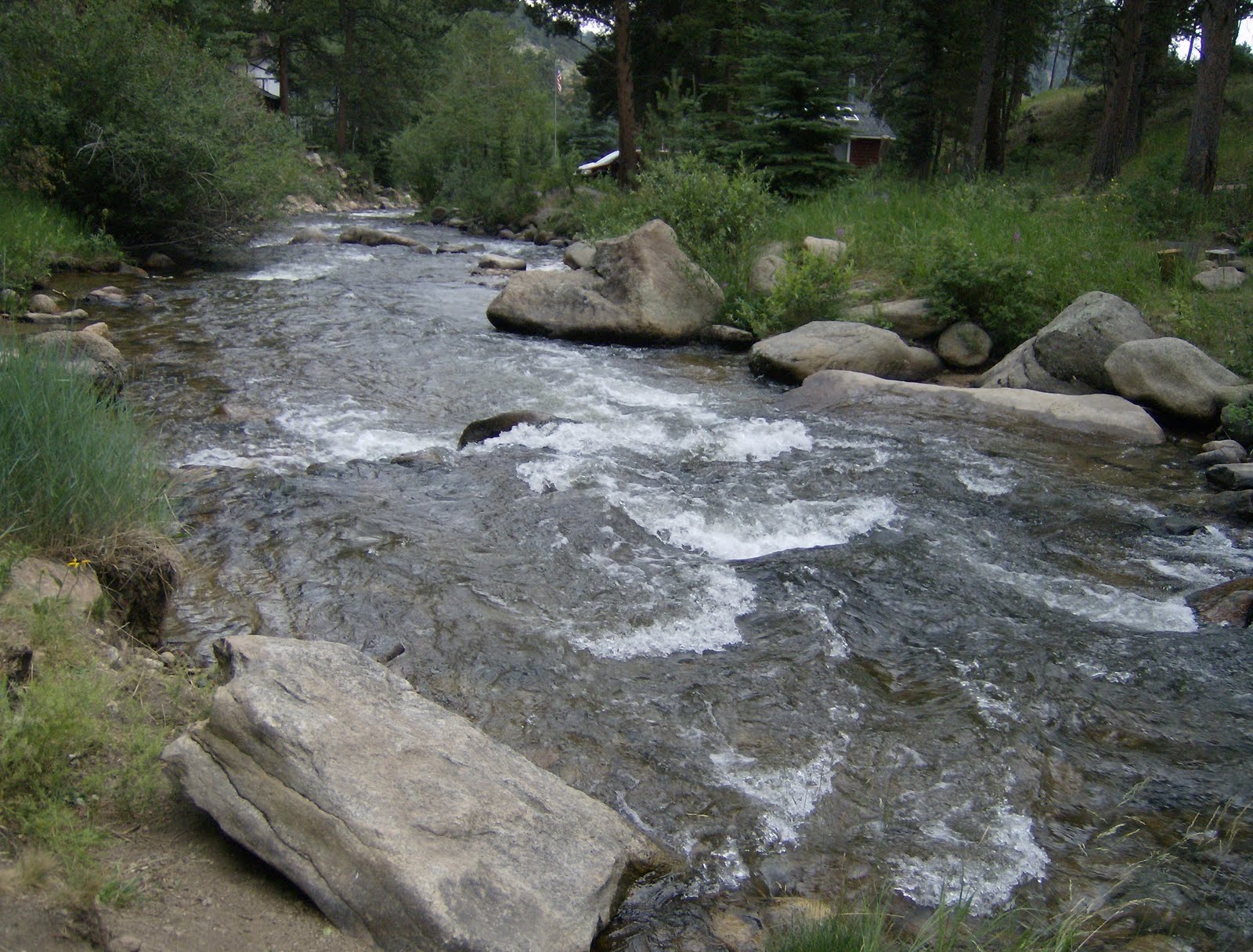
What follows is a short story I wrote after I looked at the photo to the right for a few moments. How this “world building” happens is unclear to me. I started typing with a physical visualization and the story veered off onto its own track. This is called writing "by the seat of your pants." It's like someone else is telling your fingers what to key. I've had this happen often with a really stubborn character intent on taking a story a different direction than I may have outlines. If I try to go "my" way words just won't come. When I go his or her way, it's like someone is dictating. Strange even weird at times.
Think a moment or two before you read my story. What story did you think of?

The Garden Bench

There was a chill in the air despite the brilliant sunshine. Brilliant sunshine that should have brightened the heart of the slim young woman hurrying down the garden path. Her posture bespoke quite the opposite. Hunched shoulders, lowered head, and an occasional swipe at her cheeks told of an unbearable weight.

Halting in the middle of the stone-paved path, Allison Worley blinked back tears. She took her bearings. Saw to her right the neatly trimmed privet hedge that bordered two sides of the garden. The neatly laid geometric beds framed by it were alight with the different colors of spring blooms. Red tulips blazed here, golden daffodils glowed there. Her gaze went automatically to the more serene colors and halted on the toss up of blue hyacinths and pink tulips.

The blues and pinks jumbled as if tossed by a careless hand. They probably had been tossed but there was not a careless notion in any part of its design. If one looked carefully and adjusted for one or two tulips out of line, Allison saw a capital A on the larger corner. Framing three corners of the pale blue trellis was an “L.” A half sob escaped and Allison bolted for the garden seat angled within the sides of the trellis on the paving stones.

Sinking onto the wrought iron bench Allison gasped for a quieting breath. She clenched her fingers on the edge of the seat. The iron was cold despite the sun. It spoke to the chill numbing her heart. “It’s wrong that the iron is cold,” was all Allison could think. “It glowed red gold and white with heat when Davin forged the pieces of this bench. It should be warm still with the love he used to create it.”

But it’s cold. Cold as his body, Reason twitted.

“No. No,” Allison repeated dumbly. She twisted about on the bench and desperately drank in the blues and pinks of the blooms, the greens of stems, leaves, grass and hedge. They shouted “Life!” and with heart, mind, and soul, Allison echoed them. “Life! We were to have a long long life together. We were to see these flowers, this trellis, the hedge year after year. No,” she whispered as the flare of energy drained from her. “I won’t believe it. Never, Davin. Never.”

Allison closed her eyes. She made her mind’s eye dart from the sight of those two military officers on her door step two weeks ago; from the dreadful news they brought of Davin’s death in Afghanistan. She fled to the memory of Davin’s arms about her as they sat on this bench. He had promised that pink tulips would spell an A and L if only she looked carefully. Allison had hugged him fiercely after Davin explained their pink color would bespeak of his gratitude and appreciation for her love and as a pledge of his.

“Davin,” Allison cried, eyes still tightly squeezed shut, as she clung to her belief that he still lived. They had refused to tell her what had happened; told her it was better she remember her husband as she’s last seen him, not as the IED had left him and his fellow soldiers. She shuddered at the scenes that filled her nightmares. How could it be better not to know?

“Allie,” a voice croaked softly. “Allie?”

Blinking back tears Allison braced herself to present a braver face for Davin’s father. She owed Davin that much. Both hands to her cheeks, she brushed back tears and forced her eyes open. The figure before her blurred in her tears’ sheen. Allison growled angrily at the mirage and knuckled her eyes fiercely. “Please go inside, Dad,” she said with iron willed resolve not to upset this dear man anymore than he was. “I’ll come inside in a moment. Why don’t you set the kettle on?”

“Give me a smile and I’ll go do that,” the familiar voice urged.

If only Dad didn’t sound so much like Davin. I’ve got to get past that . . . and so much else. With a last swipe of her eyes Allison said, “I’ll come with you, Dad. We’ll have a cup together.” She stood and took a step forward and then froze in place.

“I’ve aged,” Davin croaked, “and am a tad worse for wear but really, Alli—”

“Dear God,” Allison gasped, her eyes wide, searching. A thick bandage covered half of his face and another his throat, his left arm was in a cast but it was Davin. Eyes overflowing with tears and heart flooded with gratitude, Allison gently took him into her arms and laid her head on his chest. Explanations could wait. She didn’t care what they were. The assuring steady thump beat of his heart brought a huge lump to her throat. Acknowledging her miracle Allison said a silent prayer for the woman whose man would not return.

Resources for Settings and World Building, Part 2 (Penny Rader)

If you missed the first part of this resource list, you can find it here .

Make Your “Where” Memorable (Katrina Stonoff)
“… I attended a Fire in Fiction workshop given by über-agent Donald Maass, and Maass brought setting home to me for the first time. ‘World development is context, not description,’ he said. ‘Emotions are what pull the reader in, not details. Not plot. Not description. Emotion.’”

Medieval Demographics Made Easy (S. John Wright)

Among the topics covered: how many in that kingdom; town and city population; merchants and services (handy chart to determine how many shoemakers or carpenters or even butchers a village might have depending on population).

Partly Cloudy, Scattered Showers: Setting the Scene with Weather (Larissa Ione)

“Used properly and creatively, weather can have a tremendous impact on your story. Weather happens twenty-four hours a day and seven days a week in the real world, and so it should in the world of fiction. …Use it to create setting, to highlight emotion, and to pull the reader in with something to which everyone can relate.” The second half of the article gives ten tips to avoid common mistakes writers make.

The Power of Setting (Barbara Samuel)

“…I strongly believe that a novel cannot be great without a powerful setting. Get setting in place, and all the rest falls together. Setting is about detail, about weather and landscape and the personalities spawned by those places.”

Setting (Keith Gray)

“…setting can be the conflict in your story. …adds to the atmosphere and mood of the story. … can add to what you’re trying to say about your character. … a slice of virtual reality.”

Setting (Lori Handeland)

“…have you ever considered a setting can influence your entire novel and the readers' response to that novel? If you get it right--if you describe the setting so brilliantly the reader can picture it without ever having been there--poof! Magic occurs. The reader is in the midst of your setting and therefore in the midst of your story. But if you get it wrong--oh, oh--the reader's suspension of disbelief is lost.”

Setting as Character: An Interactive Approach (Jade Lee/Kathy Lyons)

"Just keep in mind that each setting needs to reflect its owner. ... And then ... the POV character needs to see it per his/her own peculiar precepts."

Setting: Creating the Flavor (Sylvia Dickey Smith)

“A writer can start with their setting, and then develop the characters and the plot. Or they can begin with the setting and the characters, and then develop the plot. There is no one ‘right way’ to begin. Develop your … novel in a way that works for you. The key ingredient is that you are in love (or hate) with your setting whether it is a real place, or it is one you create in your mind, or a mixture of both.”

Setting Exercises and Setting Worksheet (Sherry Wilson)

“Practice your powers of observation throughout the day… Sharpen your visual memory… After you’ve written a scene, get some colored pencils or highlighters and attach one color to each of the five senses--yellow for sight, red for sound, green for touch, orange for smell, and blue for taste, for example. Now go through your scene and underline or highlight any descriptive passages according to which sense they appeal to. Try to make your pages look like a rainbow, rather than mostly yellow.”

Setting Isn’t Just Time and Place (Janet Dean)

“Use the details of your setting to enrich your story. Setting should advance and strengthen your plot. Setting can heighten emotion, reveal character, emphasize mood and conflict. By using setting as a character to interact with your characters, you’re showing instead of telling. And you’re increasing the emotional impact for the reader.”

Setting – The Backbone of Your Story (Janet Corcoran)

“The 5 basic elements of setting, besides time period, are physical locale, customs and manners, lifestyles, and historical events.”

Setting Thesaurus (Angela Ackerman)

After reading this post, check the lists on the far right side of the blog. Scroll down until you get to the Setting Description Thesaurus and you’ll see 70+ settings to click on, ranging from abandoned mines to haunted house to old pick-up truck to zoo.

Using Your Setting Lists (Theresa)

“…a setting list can help break things loose by letting you approach scene construction from the most-overlooked angle.”

Wherefore Art Thou? (Connie Sampson)

“Setting is much more than a place to hang a story. Well done, setting will immediately draw the reader into the place and mood of the story, making him part of it.”

World-Building 101 (Hayley Lavik)

“Every world needs to ring true and fulfill its contribution to the story. Fantastic, historic, and yes, modern settings all need to maintain their authenticity and sincerity. That's where the world-building comes in, to build tone, mood, facts, and details that combine into a whole, thriving setting that feels alive even when the reader closes the book -- all the more reason to keep that book open.”

World-Building 201: How to eliminate the info dump (Hayley Lavik)

“The same as spelling out every detail of a character's appearance can alienate a reader from identifying with them, laying down every nuance of a world, or a backstory, removes the reader's chance to interpret for themselves. Show us what we absolutely need to know, and let us draw the pattern of things according to our own preferences.”

Writing Dynamic Settings (Kimberly Appelcline)

“…when creating the setting for a story, make it as dynamic as possible. ... Rather, use setting consciously to communicate specific information to achieve a particular effect on your audience. … You can also use setting to enable plot – especially through encouraging movement and raising audience questions and expectations – and develop character…”

I hope these resources have been helpful. Please share any that I may have missed.

Building a Cowboy Story World

These are just some of the many online sources for information to help build a story world for cowboys, historical or contemporary.

Basic Horse Care – Horse behavior, feeding, hoof care, common health problems, psychology for riders

Beef Cattle Supplies – Farm tractor implements, bull selection and management, beef cattle breeds and breeders, beef cattle heifer management, beef cattle marketing, big farm store, cattle associations

Horse Supplies- Country Supply– Dewormers, pest control, horsewear, supplements, medications, leg protection and hoof boots, fencing, stable supplies, halters and leads, grooming and bathing, riding apparel, Western tack, farrier tools, and more

Beef Cattle Terminology – The lingo of the trade

Breeds of Livestock – Cattle, horses, goats, sheep, swine

Pedigree Cattle Breeds – The CattleSite – Beef and dairy breeds, breeders, societies and associations

Bull Riding – Wikipedia’s general information

List of Rodeos – Wikipedia’s list of many rodeos

Pro Bull Riders – Riders, bulls, schedules, standings, photos

Pro Rodeo Cowboy Association – Rodeo results, standings, schedule, events, cowboy bios, champions, stock bios, and more

Cattle Today Q & A Boards – Discussion boards on beginner’s, health and nutrition, breeds, breeding and calving issues, grasses, pastures and hay, feedyard, trucks, tractors and machinery, and more

Cowboy Wear-Cavender’s – Cowboy hats, boots, jeans, shirts, and more

Cowboy Hat Guide – Hat selection and care, storage, size and fitting, wearing and handling, protecting and cleaning, cowboy hat etiquette

Cowboy Lingo – The people and land, personal gear, saddles and tack glossary, horse terms, cattle terms, cattle drives

Western Décor – Lone Star – Southwestern rugs, Western bedding, furniture, lighting, pillows, wall hangings

Ranch Vacations – Dude ranch rates, selecting a ranch, list of dude ranches, international ranches, ranch categories

Rodeo Attitude News – Event listings, associations, youth rodeo, international rodeo, sports medicine, cowboy ministries, rodeo tickets, arenas

Rodeo Schools – Where to Rodeo.Com – Schools for roping, bareback riding, bull riding, roughstock riding, goat tying clinic, and more

Rodeo Supplies – Bull riding, bareback, saddle bronc, barrel racing, ropers, steer wrestling

Saddles & Tack – Chick Saddlery – Saddles of all kinds, bridles and headstalls, breast straps, reins, saddle pads, blankets, bits, girths and cinches, saddle bags, stirrups, spurs, halters, leads, horse boots, leg wraps, snaps, buckets, horse grooming aids, chaps, and more

Resources for Settings and World Building, Part 1 (Penny Rader)

We’ve had several great posts this month about how our members create their story settings and build their story worlds. I thought I’d share some of the resources I’ve come across.

Writer’s Guide to Places by Don Prues was recommended during one of last summer’s RWA national conference workshops.

This book features all fifty states, ten Canadian provinces, and fifty-one North American cities. It provides information such as basics that shape your character (state motto, major industries, prevalent religions, ethnic makeup, etc.), significant events your character might think about, facts your character might know, food & drink, myths & misconceptions, interesting places to set a scene, places where your character might live, etc. (Warning: Many of the reviews on Amazon say this book has errors and out-of-date info, so while it may be useful as a starting point, you will definitely need to do deeper research.)

The Petit Fours and Hot Tamales blog has a section titled Travel with Us. http://petitfoursandhottamales.com/travel-with-us/

The posts give info about why visit this place, favorite places to eat, what is this place known for that is not stereotypical, general population, must see/can’t miss, etc. They plan to have a new post each month.

I found a wonderful array of articles online about creating settings and world-building. I hope you’ll find them helpful:

The Art of Description: Eight Tips to Help You Bring Your Settings to Life (Anne Marble)
http://www.writing-world.com/fiction/description.shtml

“Avoid huge lumps of description…Make description an active part of the story…Describe what your characters would notice…Use strong, active, concrete writing words…Use all the senses…Don't let description hang you up during a first draft…”

Blueprints: Building a Home for Your Characters (Elizabeth Chayne)
http://www.writing-world.com/fiction/blueprints.shtml

“The immediate advantage about drawing a house plan for your characters is that it can give you a fairly concrete idea of what sort of house your hero lives in. Of course, it's never going to be the same as actually standing in a real house, but if you don't have a substantial bank account to buy a real-life model, house plans are the next best option.”

Character and Setting Interactions (Alicia Rasley)
http://www.sff.net/people/alicia/artset.htm

“…a quick exercise to help you explore your protagonist's relationship with the setting.”

Collect Settings, the More Unusual the Better (Angela Booth)
http://www.angelabooth.biz/2007/03/fiction_collect.html

“Create a ‘Settings’ section of your writers' journal. Pretend you’re a location scout for a movie. For the next two weeks, wherever you go, write a short entry in your journal describing the key points of your location.”

Creating a Realistic Fantasy World (Penny Ehrenkranz)
http://www.writing-world.com/sf/world.shtml

“Creating your fantasy world means building a world based upon reality and making sure that your reader knows the rules of that world. Your characters must remain true to those rules throughout your story. For your readers to accept and continue reading your story, they have to believe in your world and accept what is happening to your characters.”

Creating a Setting (Taylor Lindstrom)
http://menwithpens.ca/fiction-writing-creating-a-setting

“Creating a setting is easier than creating a character. That doesn’t mean it doesn’t require some serious thought and attention.”

Creating Fantasy and Science Fiction Worlds (Michael James Liljenberg)
http://www.elfwood.com/farp/thewriting/liljenbergworlds/index.html

Covers creating your story world’s theology/spirituality, physics, weather, geography, astronomy, zoology, and anthropology.

Developing the Fictional World through Mapping (Holly Lisle)
http://hollylisle.com/fm/Workshops/maps-workshop.html

“Most of the books I've written have started with a map. Not with an idea, or a character, or a theme. With a hand-drawn map, doodled out first while I was sitting and keeping someone else company, or while I was on break, or when I couldn't think of what to write and had no ideas to speak of and knew that if I drew a map something would come to me.”

Fantasy Worldbuilding Questions (Patricia Wrede)
http://www.sfwa.org/2009/08/fantasy-worldbuilding-questions/

Topics: The world; Physical & historical features; Magic & magicians; Peoples & customs; Social organization; Commerce, trade, & public life; Daily life.

Four Ways to Bring Setting to Life (Moira Allen)
http://www.writing-world.com/fiction/settings.shtml

“Reveal setting through motion… Reveal setting through a character's level of experience… Reveal setting through the mood of your character... Reveal setting through the senses…”

Historical Fiction Settings: Details to Make Your Story World Real (Jennifer Jensen)
http://writing-genre-fiction.suite101.com/article.cfm/historical_fiction_settings

“Your reader should be able to tell when and where the story is set from the details you give. More than that, your story should not be able to happen anywhere or anytime else.”

Houses are People Too: The Structure of a Literary Device (Geoff Hart)
http://www.writing-world.com/fiction/house.shtml

“…houses can be as real as any other character in a story. To see how that works, consider the concept of house from three distinct, but strongly interrelated viewpoints: the concrete and physical, the psychological, and the purely symbolic.”

How Do You Research Settings (Joyce Good Henderson)
http://writethat.com/2010/02/04/how-do-you-research-settings/

“Watch people, places, and their interactions with the environment…Walk through a scene as if you are the character…Take your characters to a restaurant…contact the local Chamber of Commerce…Be as accurate as possible...”

The Importance of Setting in Fiction Writing (Joyce Good Henderson)
http://www.helium.com/items/1329241-setting-fiction-novel-writing-character-how-to-author-book-tips

“Setting gives framework for the hero and heroine to interact… creates mood and influences behavior… defines character… adds to conflict… evokes emotional response… adds to the sensuality of the scene… foreshadows and moves the plot along… involves inside and outside, transitions and movement…”

Kathy Carmichael Talks about On-Location Research
http://novelthoughts.wordpress.com/2010/02/10/kathy-carmichael-talks-about-on-location-research/

“We drove the city, visited shops, restaurants, stores, and the local newspaper. We looked for good locations to commit a murder, dump a dead body, and so on. If you’ve never stood on an embankment, looking down at a river, and wondered how you’d get a heavy dead body down that hill, then you may not realize quite how invigorating it is.”

Location, Location, Location (Jim C. Hines)
http://www.writing-world.com/fiction/location.shtml

“We're writing stories, not doctorate-level dissertations. ... I've found it helpful to focus on two things: details and differences.”

Part 2 will continue on May 31. I'd love to hear if you've found any of these resources helpful. Please share any resources you think would be helpful to another writer.

Building a Medieval Story World

Each of the prior blogs on world building has been excellent thoughts on the subject. In a nutshell, in order for the reader to get the most out of your story, you, the writer, need to create a world for the characters the reader can clearly “see” and feel part of throughout the story’s journey. It falls back on that time-honored and sometimes painful part of a writer’s job: research, research, research.

For my blog, I’m going to share some of the online resources I used in building my “world” for the medieval series I am currently writing. I believe that basically the same thought and research process could be applied to whatever time period you’re using.

Understanding the Time Period: (5th thru 15th century)
Medieval Terminologry and Glossary This is a resource for nice, simple definitions of terminology of the medieval time period.

Medieval-Castles Glossary Another resource for medieval terminology.

Feudal Terminology This is a resource for medieval feudal terminology.

Glossary of Feudal, Medieval and Castle Terminology This is a resource for medieval terminology with slightly longer definitions.

Wikipedia-Middle Ages This is a nice overview of the various time periods involved in the Middle Ages.

Medieval Atlas This is a resource with a number of listings of different maps for the period.

Scottish History Timeline This is a resource for a timeline of Scottish history.

History of Scotland This is a resource for learning about the heritage of Scotland including its history, geography, culture, curling, tartans, highland dress and much more.

Medieval Jobs This resource gives quick descriptions of the social classes and has a nice list of the various occupations for the medieval period.

Medieval Spell This is a great resource for many kinds of information about the medieval period including architecture (castles and manors), knights (code of chivalry, jousting, armor, swords, tournaments, shields), medieval society (life overview, castle life, roles of women, fashion, food, drinks, entertainment, merchants, punishment, medicine), and warfare (weapons, archers, siege, siege weapons).

Medieval Period This is another resource for basic information on religion, clothing, weapons, battering ram, entertainment, knights, tapestries, art, music, food, medicine, women, men, society, laws, castles, siege engines and more.

Medieval Period Castles & Weaponry This is a good resource for learning about the parts of a castle and what was done in each part or might have been there as furnishings.

Map of English Castles This is a resource with a map for English castle locations, with links to photos and brief descriptions of the various castles.

Castles in Britain This is another good resource for seeing photos of and learning a little about various English castles.

Castles in Scotland This is a great list of castles in Scotland with much information and many photos of each castle.


Weaponry:
Medieval Collectibles This is a good source for seeing pictures of and reading brief descriptions of many medieval items including swords, long bows, archery supplies, chainmail and leather armor, daggers, dirks, helmets, shields, halberds, battle axes, maces, banners, tapestries, and much more.


Characterization:
Medieval Clothing Pages This resource links to various articles on medieval hair information including how to braid hair, how to wear a veil or circlet, how to make a coif, wearing hoods, how to make cylinder curls (crespinettes), how to make a caul or reticulated headdress, and more. It also links to articles on clothing information such as basic garb, making a tunic, etc.

Glossary of Middle Ages Footwear This is a resource for medieval footwear terminology.

Basic Medieval Speech This is a resource with a brief amount of basic medieval speech.

Medieval Words-Orgins This is a resource for words originating in the medieval period.

Medieval Names This is a resource for medieval names.

Scottish Clans This is a resource for a list and explanations of the official Scottish clans.

Original Scottish Clan Map This is a great map for the areas controlled by the various early Scottish clans.

Glossary of Scots Terms This is a dictionary of Scots terms.

Wikipedia Scots-English Dictionary This is a nice quick dictionary of Scots to English words.

Research and World Building

When the topic was first suggested for a blog, my knee-jerk thought was that I don't world build! The trouble with that idea is that I do. We all do. I just never thought of it that way. No matter what the time or place of a story, a world is built for the characters. It's a place and a time where and when they participate in the life we create for them.

When choosing a setting for your story, even a fictional setting requires some kind of research. My first published book was set on a ranch in Montana, where the heroine became stranded during an October snowstorm. I've only been a few miles into Montana in August and am not familiar with the early snowstorms there. Luckily I knew someone who lived there and could help me with specifics.

We're often told to "write what you know," but writing would be boring if we kept only to what's familiar. Information about anything and anywhere can be found on the Internet, making researching much easier. I wanted to do a scene with the hero and heroine of a story taking place outside under mistletoe, but not necessarily a Christmastime story. I've known for years that most of the mistletoe (the real kind) we see here in Kansas during the holidays comes from Oklahoma. I once heard that it grew on the oak trees there. After doing a little research, I learned two things. Mistletoe in Oklahoma grows on apple and other trees, especially fruit trees, but not so much on oak. And mistletoe just happens to be Oklahoma's state flower. As it turns out, that's even better than I'd imagined. Now I have a scene in an old apple orchard and, depending on the time of year it ends up becoming, mistletoe can be found all year.

There are so many interesting places in this country and in the world, why keep to something you know? Have you ever watched a movie and wondered what the real location of the setting was? Did you think it might be a great setting for your own story? Try IMDB.com (Internet Movie DataBase). That's where I discovered where The Man Without A Face was filmed and hope someday to use that setting (Bath, Maine) for a book.

Details--accurate details--can help make the story come "alive" and real to readers. Don't try to cheat on this. Having too much research information is much better than not having enough. If drawing maps or keeping charts is what's needed to keep details straight, that's okay. Everybody has their own way of doing it. If you don't know where to start, talk to someone who's happy to share their method. You're always welcome to change it to fit you.